
Budgeting for cybersecurity shouldn’t feel like guessing the price of a mystery box, which is why understanding penetration testing pricing is vital for 2026 cybersecurity.
You know you need to secure your digital assets. You know you need to find the flaws before cybercriminals do. However, when you ask vendors for a quote, the numbers vary wildly. One firm asks for a few thousand euros. Another asks for fifty thousand.
This massive gap causes confusion. It stalls crucial security projects while leadership tries to understand the disparity. We want to remove that confusion completely.
The Core Drivers of Penetration Testing Pricing
When you request a quote, reputable security firms don't pick a number randomly. They calculate their penetration testing pricing based on the specific time and effort required to compromise your systems. A proper security audit is a manual, labour-intensive process.
Human pentest experts must analyse your architecture, find weak points, and exploit them safely. Therefore, the primary cost driver is the amount of time the testing team needs to do the job properly.
The Size and Complexity of the Target
A simple, static website with five pages takes very little time to test. An enormous financial application with hundreds of user roles, payment gateways, and third-party integrations takes weeks.
The complexity of your application directly shapes the final quote.
If your software relies on intricate business rules, testers must spend more time understanding those rules before they can try to break them. They must map out every single place a user can input data. Pentesters must trace how that data moves through your backend servers.
A large, highly interactive application simply requires more hours of expert analysis.
The Testing Methodology Used
How the vendor tests your systems also heavily influences the cost. Some firms rely almost entirely on automated scanning software. They run a tool, print a PDF, and charge a low fee. This is a vulnerability assessment, not a manual audit.
A manual audit requires highly skilled professionals who think like real attackers. They write custom scripts and manipulate data packets manually. They find the complex logic flaws that automated tools miss.
This level of manual expertise demands a higher price. However, it provides actual security rather than a false sense of safety.
Breaking Down the Price Tags
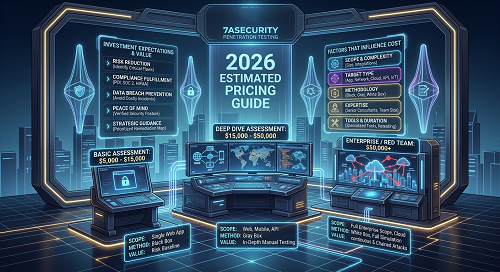
Understanding the different tiers of penetration testing prices helps you set realistic expectations for your 2026 budget. It also helps you spot vendors who are cutting corners. Let’s look at what different price points typically buy you in the current market.
The €5,000 Range: Basic Security Checks
At this lower end of the spectrum, you're usually paying for a very small scope. This price might cover a basic external network check or a very simple, single-page application with no login portal.
Sometimes, this price point indicates a severe lack of quality. It often means the vendor is relying heavily on automated tools with minimal manual verification.
If you have a complex application that handles sensitive customer data, a quote this low is a major red flag. It usually means the vendor will miss the critical vulnerabilities that actually put your business at risk.
The €15,000 to €30,000 Range: Standard Business Applications
This is the typical range for a thorough, manual internal pentest of a standard business application. In this bracket, you should expect a team of skilled professionals to spend a week or two actively attacking your software.
This price covers a deep review of your authentication processes and will test for data isolation and business logic manipulation. It provides the detailed, verified reporting necessary to pass strict compliance audits like SOC 2 or ISO 27001.
When you pay in this range, you're paying for human intuition and guaranteed results.
The €50,000+ Range: Enterprise and Complex Logic
Quotes in this upper tier apply to massive enterprise environments. This might involve testing a complex mobile application, its supporting cloud infrastructure, and dozens of underlying communication interfaces simultaneously.
This price point might also cover extended red teaming exercises. During a red team exercise, testers attempt to breach your entire organisation over several weeks. They test your physical security, your staff awareness, and your technical defences all at once.
These are highly advanced, lengthy engagements that require immense technical skill.
The 7ASecurity Approach to Transparent Quotes
At 7ASecurity, our team insists that understanding your penetration testing pricing should be simple and transparent. We never use hidden fees or confusing pricing models.
Instead, our fixed-price quotes are based on a rigorous scoping process. We want you to know exactly what you're paying for before we begin.
Accurate and Honest Scoping
Before we give you a number, we talk to you. We ask specific questions about your application. We ask about your user roles, your data flows, and your infrastructure. Depending on what you need, we might ask to see a demonstration of your software.
This detailed conversation enables us to estimate the exact number of days required to test your systems thoroughly. We then provide a clear, fixed-price quote based on that time estimate.
You know what you'll pay before the project begins. There are no surprises.
Our Free Fix Verification Bonus
Many security firms charge you extra money to retest your application after you fix the vulnerabilities they found. We consider this an unfair practice. True value in a security audit comes from actually fixing the problem, not just reporting it.
This is why we include a free fix verification bonus in our quotes. Once your developers apply patches, we retest the flaws for free to ensure they're permanently closed. This guarantees that your application is actually secure. It provides an unmatched return on your investment.
Frequently Asked Questions About Security Budgets
Does testing a mobile app cost more than testing a web application?
Yes, mobile applications often cost more to test. A mobile application is inherently more complex.
Testers must evaluate the code running on the physical phone and how the phone stores data locally. They must also test the communication channels the app uses to talk to your servers.
Testing across different operating systems like Android and iOS also adds to the total time required, which increases the final quote.
Will expanding our testing scope mid-project increase the final cost?
Yes, it will. Because penetration testing pricing is based on the time required to do the job, adding new targets will increase the cost. If you ask the testing team to look at three new servers or a completely new application module that wasn’t in the original agreement, they'll need more time to test those additions properly.
We always agree on a clear scope upfront to avoid unexpected price changes.
Is it cheaper to use a bug bounty programme instead of a traditional pentest?
Bug bounty programmes often seem cheaper on paper because you only pay when someone finds a flaw. However, they carry massive hidden costs.
You'll receive hundreds of fake or low-impact reports. Your internal engineering team must waste hours verifying these fake reports. This drains your internal resources rapidly.
A traditional, professional audit provides a clean, verified list of real vulnerabilities without the massive administrative burden of reviewing fake submissions.
How long does a typical €20,000 security audit take to complete?
A project in this price range usually takes between two and three weeks of active testing. After the testing phase, the security team needs a few days to compile the detailed technical report.
Once you receive the report, the timeline for applying patches depends entirely on your internal development team.
Do compliance requirements change the cost of a security audit?
Compliance frameworks like PCI DSS or GDPR mandate very specific testing methodologies and reporting formats.
If your audit must meet strict regulatory standards, the testing team might need to spend extra time documenting specific control validations. This added administrative work can slightly increase the overall cost of the project.
Choose Value Over Cost
True value in security testing comes from actionable results and verified fixes, not just finding the cheapest day rate.
A cheap, automated scan will give you a false sense of security and leave you exposed to real cybercriminals. A professional, manual audit provides the insights you need to secure your digital assets permanently. You need a partner who provides clear communication and guaranteed results.
Get a transparent, fixed-price quote tailored to you.